Canola drydown that ‘hits the spot’
February 9, 2024
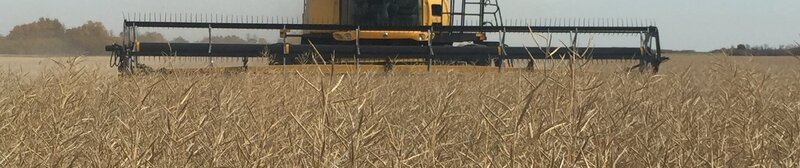
Water is the right tool for the job for pre-harvest canola applications coverage
With the shift toward pod shatter resistant canola varieties, a fall application can help prepare a standing crop for easier threshing, and get it into the bin faster. But understanding the benefits – and limitations – of products available is the best way to choose the right tool for the job.
Two birds, two stones
As harvest approaches, some growers take the opportunity to spray for perennial weeds and crop drydown at the same time. Instead of a dedicated desiccant product, straight glyphosate or a ‘glyphosate + Heat® LQ’ combination may eventually do the job.
But if the goal is weed control, glyphosate has a tougher time breaking through a canola canopy to reach the weeds underneath. And if the goal is to desiccate a crop, a desiccant product is a more effective option. Rob Klewchuk, Technical Lead – Herbicides with Syngenta Canada Inc. conducted a study to illustrate why it’s important to use tools as they are intended to meet goals.
“If a producer is trying to achieve perennial weed control, weeds like dandelions or small Canada thistle are low to the ground, compared to the height of a canola canopy,” says Klewchuk. “If they aren’t spraying enough volume, droplets can’t make it past the canopy to impact the weeds underneath.”
To get dry, add more water
If a grower’s primary goal is to get a crop that is dry enough to harvest, the most effective tool may seem like an unlikely choice: water. That’s because a desiccant such as Reglone® Ion relies on water volumes for contact with pods, stems and any remaining leaves and weeds. Reglone Ion works on contact to burst the surface cells of the plant and releasing moisture, to deliver quick-acting drydown activity.
What breaks through
Klewchuk led an internal field study that used a colourless UV dye mixed with various water volumes, to simulate a pre-harvest desiccant application on a standing canola crop. The grower applied the dye at the 200 L/ha (20 gal/ac) labelled Reglone Ion water volume rate, and compared it to a rate of 100 L/ha (10 gal/ac), to simulate glyphosate application. They used a UV light to investigate how much liquid broke through the canopy.
In a second trial, they repeated the comparison using water sensitive paper in the field.
“As we got deeper into the crop canopy, the number of droplets breaking through dropped off significantly,” says Klewchuk. “It’s important to use enough water to get that full coverage on the plant.”
More harvest desiccant spray tips
To get more spray deeper into the canopy, growers should slow down, follow recommended labelled water volumes, and point nozzles backward. The backward orientation helps offset forward travel speed, giving the droplets a slower forward velocity that helps their downward movement.
Go for weed control on a second pass
Knowing what tools can – and can’t – do is important to achieving intended results.
“If the weeds aren’t really getting covered anyway, Reglone Ion is a better option for crop drydown, so when the crop and weather are ready, the crop is ready to harvest,” says Klewchuk. “If weeds are still a problem, the producer can still apply a post-harvest application after the crop is in the bin, and they are using the tools they have for their intended purpose.”
Always read and follow label directions. Reglone® and the Syngenta logo are trademarks of a Syngenta Group Company. Other trademarks are property of their respective owners.
