How to Assess 2020 Test Plot Results
November 17, 2020
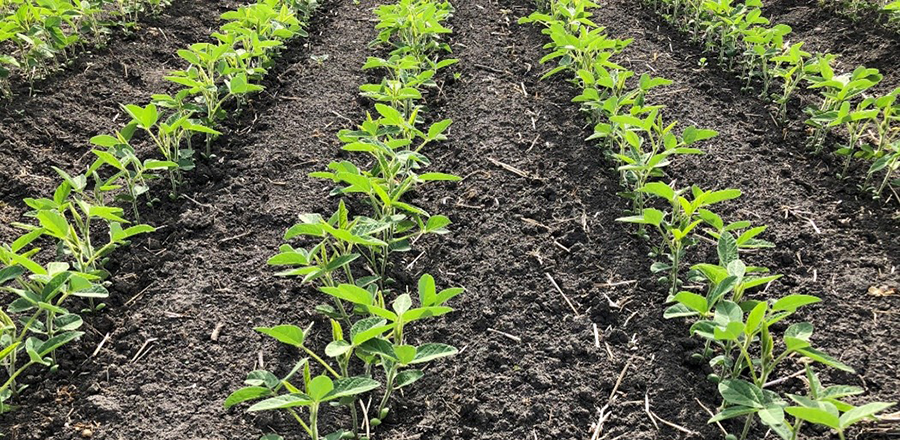
Soybean test plot results provide tremendous amounts of seed performance data, but knowing what information is most important and how to evaluate trial results is key to selecting the best varieties for your farm.
Yield is always a top consideration when making soybean selections, but Marijke Vanderlaan, Agronomic Service Rep for Syngenta cautions not to base everything on the yield data you see in trial plots.
“The variety may perform differently based on fertility, tillage practices, row spacing and disease pressure on your farm,” she says. “Do you have
Sudden death syndrome or
soybean cyst nematode pressure? Do you have soils prone to waterlogging or drought stress? Is white mould something you consistently see on your farm? These factors can trump some of the yield results that you see in a trial.”
Vanderlaan’s first recommendation is to look for consistent performance — that includes 2020 plot results as well as data from previous years and multiple sites. “Don’t sway your decision by one year of data because a variety can perform really great one year and not so great the next year, depending on the disease pressure and other factors,” she says.
Soil type and row width
Vanderlaan notes that soybean performance can also vary greatly depending on the growing environment and management system.
When looking at individual trial results, she recommends growers pay close attention to the site’s soil type and geography. “Was the trial planted in a stressful clay environment or a loamy, high-fertility soil? Noting these factors will help determine the relevance of that trial for your own farm.”
Another plot detail to look for is row spacing. Soybeans are planted across Eastern Canada in spacings ranging from 7.5 to 30 inches. Variety performance can vary depending on that management decision. This is especially true when looking at wider row spacings. It’s important to select a larger branching variety that will work in a 20” or 30” row spacing.
More trials make better choices
Consulting as many plots and trial data as possible is a good strategy. Vanderlaan notes that growers reviewing Syngenta’s
NK® Seed plot trials can also check out public trials conducted by the Ontario Soybean and Canola Committee at
GoSoy.ca when published. Looking at both small plot and field-scale trials can provide a fuller picture of how the variety performs.
“It’s important to compare the varieties that neighbour one another because we know that there’s a lot of variability across a field,” says Vanderlaan. “Be sure to look for checks in the plots – that one was placed at the beginning and end of the plot and maybe in the middle as well. If the check variety is performing consistently, then you can have more confidence in the variety of comparisons that you’re making.”
Tap into expertise
Vanderlaan also reminds growers to look to their own farms for variety selection guidance. What varieties have done well and delivered consistent performance in the past? What agronomic traits have contributed to yield success?
Her final piece of advice is to tap into experts for answers. A question she has received multiple times is related to the yield results of Enlist E3™ varieties. “With more data and more plots this year, we can confirm that we haven’t seen a yield drag with the trait,” she says. “NK
® prides itself on bringing out genetics that are top yielding in the agronomic trait packages that you need. We won’t bring a product to market unless it yields equal to, or better than what we currently have in our lineup.”
Variety selection shouldn’t be a solitary affair, adds Vanderlaan. “Talk to your agronomist or Syngenta representative because each farm is unique. Trial results are a good starting place, but you need to take it a step further to successfully evaluate the fit for your own fields.”
The transgenic soybean event in Enlist E3™ soybeans is jointly developed and owned by Dow AgroSciences LLC and M.S. Technologies L.L.C. Enlist® and Enlist E3™ are trademarks of Dow AgroSciences LLC.
Always read and follow label directions. NK® is a trademark of a Syngenta Group Company. © 2020 Syngenta
