Plan to Manage Resistant Weeds
March 12, 2020
By Marijke Vanderlaan, Agronomic Service Rep – Row Crops, Syngenta
As you’re thinking about weed control for the season ahead, a strategy to manage resistant weeds should be part of your plan.
Several weeds have documented resistance in Ontario, but the highest on the radar are glyphosate-resistant Canada
fleabane and
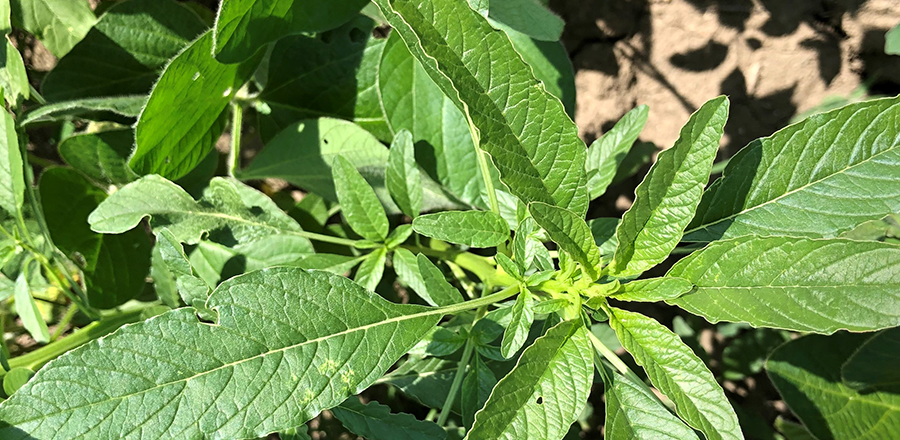
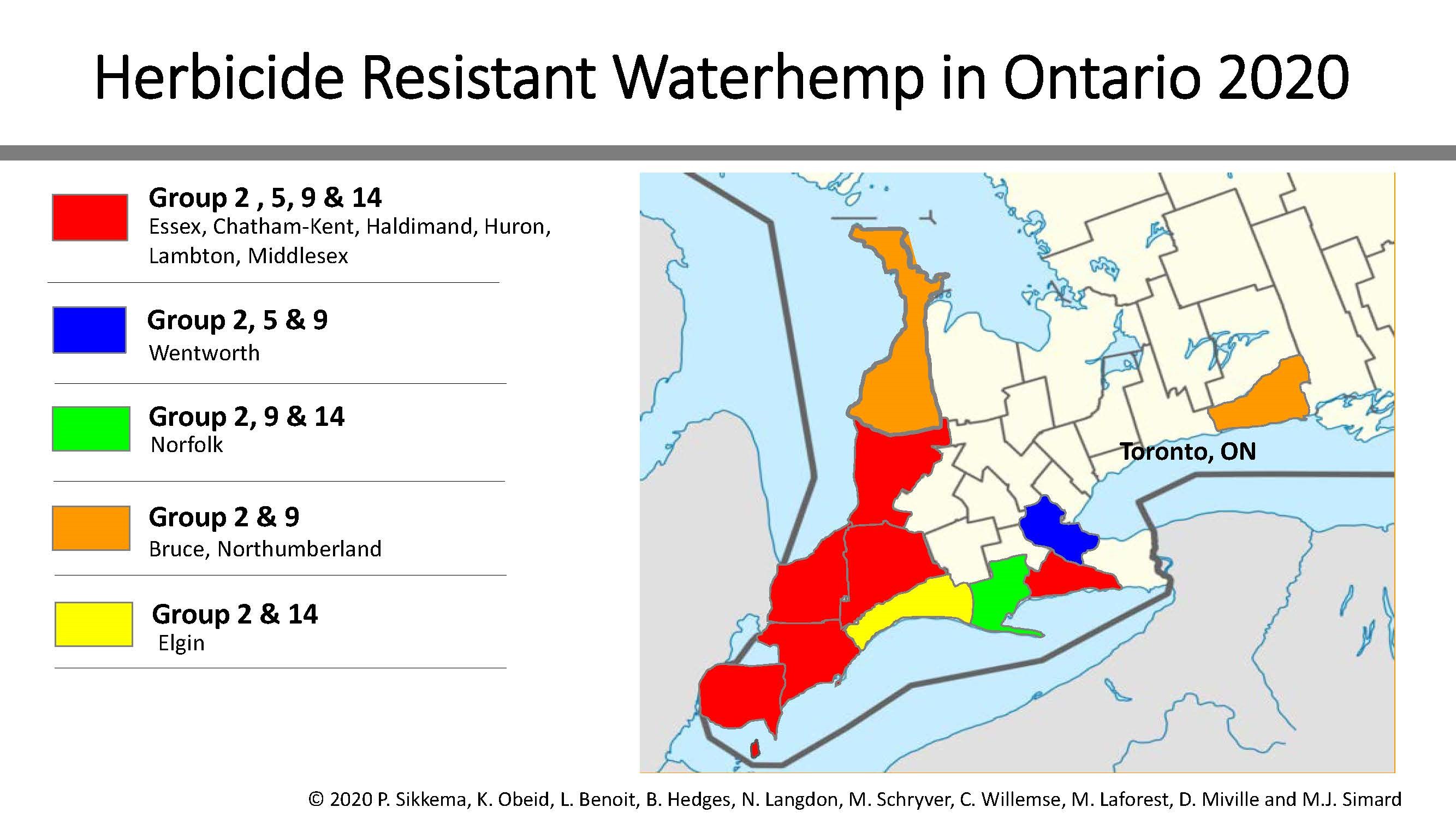
waterhemp. Group 2 resistant waterhemp was first identified in 2014. Since that time, it’s been found in nine counties; in some locations, it is resistant to herbicides in Groups 2, 5, 9 and 14.
Waterhemp is resistant to multiple modes of action because of its biology. As compared to redroot pigweed, for example, waterhemp produces about 10 times more seeds per plant. That means the plant is 10 times more likely to produce resistant offspring, creating a much higher risk for herbicide resistance.
The prevalence of resistant weeds varies throughout the province, but there are best practices to help manage resistance that every grower should follow to protect crop yield and quality.
Keep your weeds guessing
Some great advice is to “keep your weeds guessing” as to what’s coming next. You can achieve this through crop rotation, strategic tillage, planting cover crops and using herbicides with multiple effective modes of actions.
Applying the same herbicide (or same mode of action) in the same field year after year increases your resistance risk. Crop rotation allows you to change up your weed control. If you have grass crops like corn or wheat in your rotation, they provide a good opportunity to control broadleaf weeds.
For some farms, using tillage is a good fit to tackle resistant weeds. Some also use cover crops to suppress weeds from germinating.
Another best management practice is to strive for 100% weed control. Some growers who see a few weeds in their field will manage them immediately – others will leave them uncontrolled because they don’t believe they’ll be a problem. My rule is: don’t let your weeds go to seed. It’s especially important when it comes to weeds with reported resistance such as fleabane, waterhemp, ragweed, lambs quarters and pigweed.
Think pre-emergence in soybeans
An important rule of thumb is to get a good pre-emergent herbicide application down and manage escapes if you have to. I like to remind customers that we can no longer be post-emergent soybean sprayers. We have to think about pre-emergence and ensure we use multiple effective modes of action.
Tavium® Plus VaporGrip® Technology and
Boundary® LQD are two good soybean herbicide options. Both products provide two modes of action against waterhemp. When you’re dealing with fleabane, it's important to tank mix Boundary LQD for another mode of action. Boundary with Eragon®, for example, allows you to introduce another Group (14) and provides both contact and residual. Tavium should only be used in dicamba-tolerant soybeans.
I say manage escapes ‘if you have to’ because I’d rather you not have escapes at all. We need to get away from thinking we can control big weeds. A big weed is not one that’s 12 inches tall – it can be just two inches tall. Be mindful that you are selecting for resistance when you’re spraying escapes.
Tap into resistance resources
To navigate through the herbicide selection process, talk to your agronomist, local retail or crop protection rep. There is also a lot of good information available from the Ontario Ministry of Agriculture, Food and Rural Affairs, such as the
Problem Weed Guide. The
Pest Manager app is another great resource to help growers identify herbicide options and flag any resistance concerns.
For more information including articles, resources and videos on resistance management, check out Manage Resistance Now. This is a collaborative effort of industry, academia and government experts, brought together by CropLife Canada, to raise awareness and promote the adoption of strategies to manage weed, insect and disease resistance.
Always Read and follow label directions. Boundary® and Tavium® are trademarks of a Syngenta Group Company. Plus VaporGrip® Technology is a registered trademark of Bayer Group, Monsanto Canada ULC licensee. © 2020 Bayer Group. All rights reserved. Other trademarks are property of their respective owners. © 2020 Syngenta.
