Cracking corn yield: Putting stress to the test with 4 Yield Drive by Syngenta
September 11, 2025
If you haven’t heard of Greg Stewart’s new approach to measuring and predicting corn yield, you’ll want to dive into
4 Yield Drive. This concept combines information growers can easily measure – like ear count, rows around the cob, ear length and kernel mass.

To reach higher-yielding corn, Stewart is looking into these four components and testing common environmental stressors using plot studies conducted at the Syngenta Honeywood Research Facility in Plattsville, Ont.
“I’m not just measuring yield, I want to know how each yield-driving component is affected by the type of stress in the crop,” explains Stewart. “And of course, how to support the plant to ‘fix’ the yield limiting factors and help the plant overcome each type of environmental stress.”
Defoliation
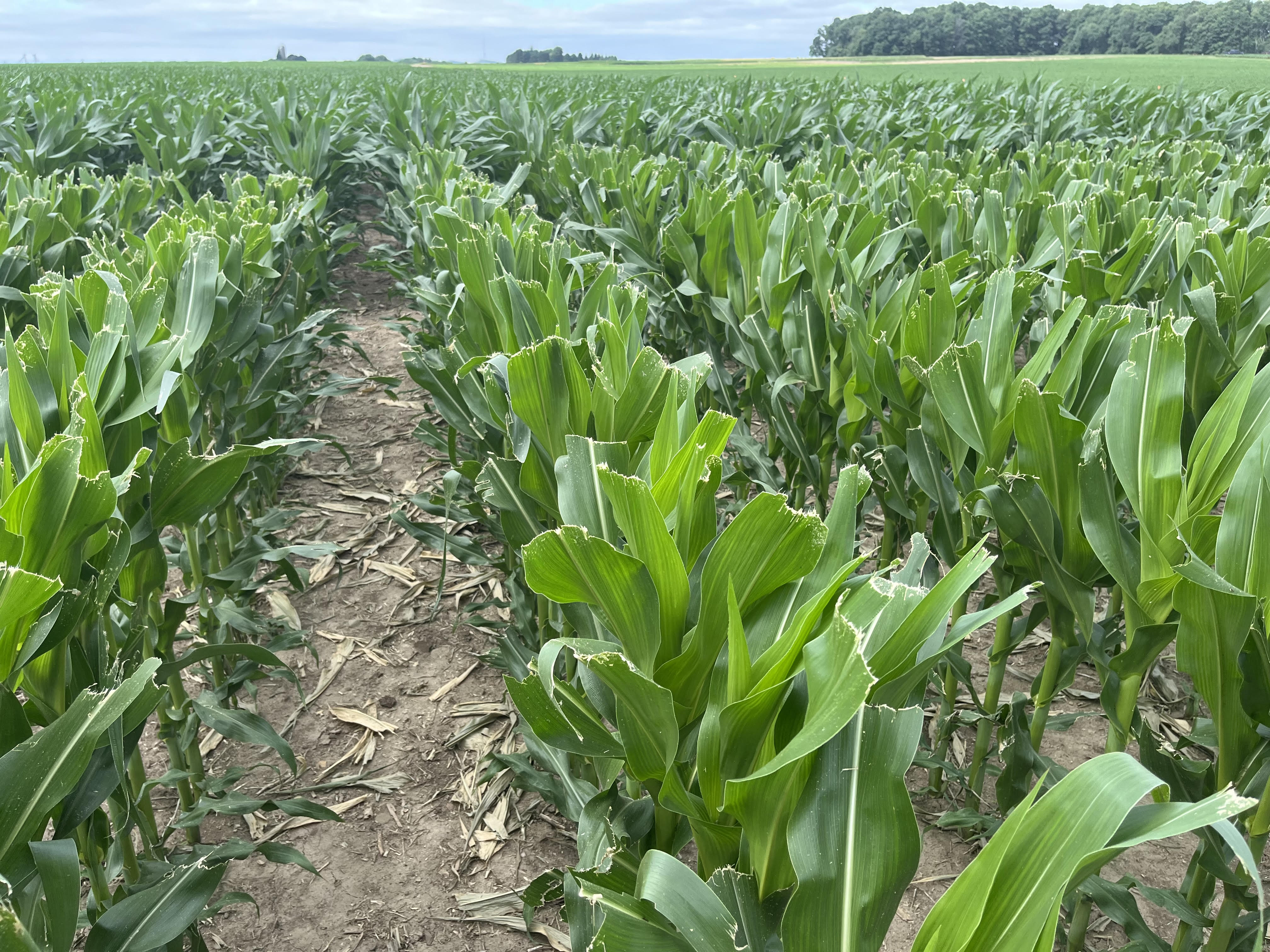
Stewart says that the most common causes of corn defoliation are hail damage or radical insect feeding. To mimic this type of destruction, he’s used a string trimmer or weed whacker to damage the corn. Stewart is now in the process of comparing stress relief strategies to help the plants overcome the defoliation and enhance their ability to contribute to the yield components – mostly driven by maintaining ear length and kernel mass.
So far, Stewart is seeing a good response from applications of Megafol™, a liquid foliar biostimulant that is helping the plants recover from the physical damage of defoliation.
“The idea behind a biostimulant application is to help plants spend less time recovering and more time growing so the corn doesn’t lose its yield potential,” says Stewart, explaining that farmers may want to consider mixing a biostimulant like Megafol with a fungicide to maximize application and timing efficiencies, and give crops a boost to help them recover from environmental stressors like defoliation.
Drought
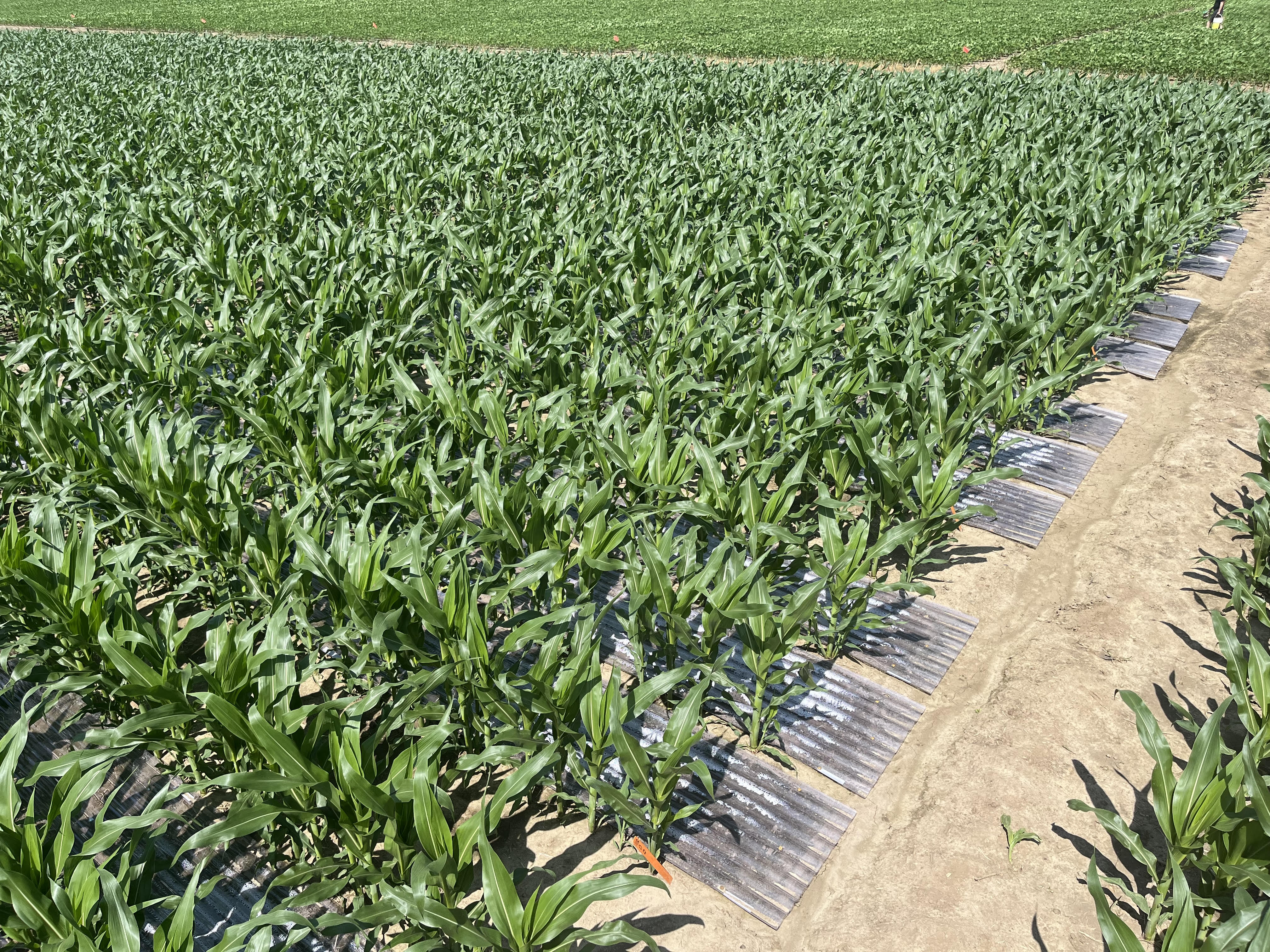
According to Stewart, drought, or low moisture in corn during July has a serious impact on corn yield. That’s one of the reasons he’s including drought stress in his research. To mimic drought, he placed clear fibreglass roofing sheets between the rows of corn to limit crop moisture.
Stewart has been testing YieldON™, a liquid foliar biostimulant that is proven to ‘switch on’ crop productivity. By applying YieldON, Stewart is examining how a biostimulant might help corn plants manage drought stress, while increasing yield by improving the flow of nutrients and sugars throughout the plant.
He notes that this biological product can be especially effective at stimulating grain fill – a key contributor to yield components.
High-density hybrids
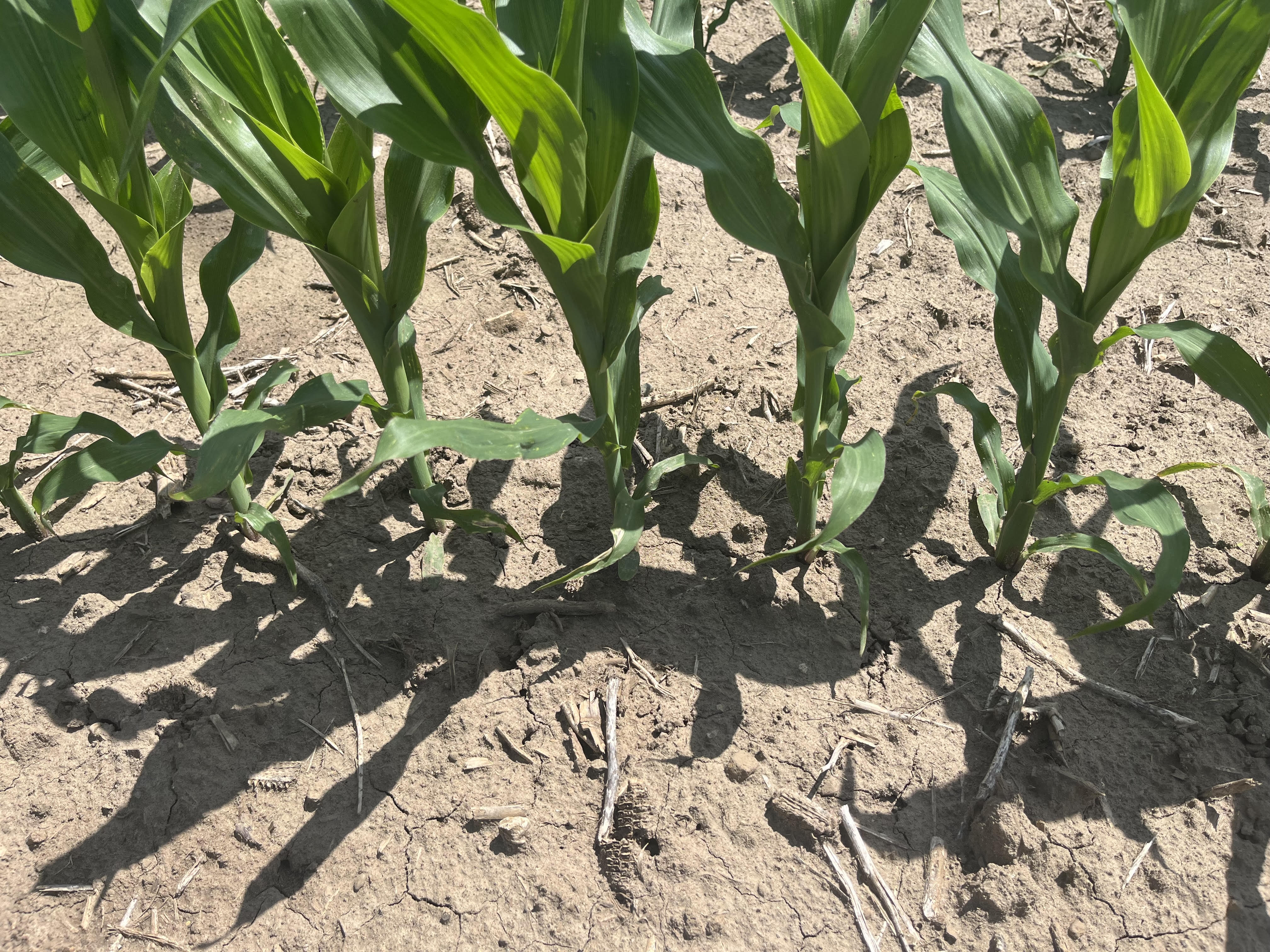
The question of ‘what is the right hybrid density’ has been asked over the years. In fact, it’s one that Stewart continues to ask himself. So, he decided to explore this question this summer, planting corn plots at various population densities in an effort to stress the crop to see how yield components are impacted and if biologicals can mitigate the stress response.
“Many farmers are aware that when you go beyond 30,000 to 33,000 corn plants per acre the density creates additional stress on the plant’s system. In some cases, the field can’t support the population density, and in others it’s the hybrid itself,” says Stewart, explaining that in these types of plant stress situations, corn will pull back on kernels per ear and in kernel mass – directly affecting overall yield.”
Stewart notes that fungicides like Miravis® Neo have already proven to help plants build better kernel numbers and kernel mass in higher density situations so he’s using this information as a benchmark to measure the impact of biostimulant applications.
“If we can use biologicals like Megafol or YieldON to reverse the pullback on ear characteristics caused by increased hybrid density, maybe we can build on the higher yielding, high density results that have been seen with fungicides,” he says. Stewart admits that in the end it will probably be some combination of the right hybrid, late nitrogen supply, fungicides and biologicals that come together to form a higher density – higher yielding package.
Why research matters
“If we can identify which yield component is affected in each of these stress situations, we can determine how to fix it or help the plant overcome the stress and resume feeding the necessary yield component,” says Stewart.
Stewart’s current research is still in the early stages, but he is hopeful the results will add some insights towards practical recommendations and solutions.
Always read and follow label directions. Miravis® Neo refers to Miravis® Neo 300SE fungicide. Miravis® and the Syngenta logo are trademarks of a Syngenta Group Company. Megafol™ and YieldON™ are trademarks of VALAGRO S.p.A., a Syngenta Group Company. All other trademarks are the property of their respective owner.
