Top three horticultural hurdles of 2024
November 13, 2024
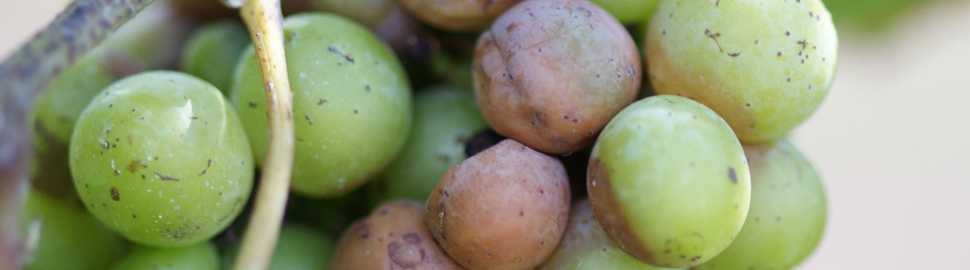
As we reflect on the 2024 growing season, horticulture faced significant challenges that tested growers' resilience and expertise. Let's explore the top issues and their solutions.
Botrytis: The berry and grape menace
Botrytis (or grey mould), again became a major threat to berry and grape crops, threatening yield potential and berry quality. The frequent rain events in BC, and eastern Canada during bloom provided the humid conditions necessary for infection.
For growers in BC where heat and lack of rain have been the primary issue for the last few years, this past year was a reminder to go back to basics on how to manage Botrytis. Going into 2025, here are a few things to consider when working to stay on top of Botrytis in your field.
- Reduce the risk of injury to fruit or canopy as Botrytis infection is most successful on weak, damaged, and dying tissues.
- Ensure adequate air circulation to reduce humidity and wet periods within the canopy where flowers and fruit develop.
- Be aware of how susceptible your varieties are to Botrytis and plan a preventative program accordingly.
- Apply preventative fungicides, especially during flowering. In grapes and blueberries, pending weather conditions and length of flowering, a second bloom application may be required. Pending weather and disease pressure in the field, a third or fourth Botrytis-targeted application may be required at ripening and/or pre-harvest. In times of multiple fungicide applications targeted at Botrytis, follow fungicide resistance management strategies like rotating groups of chemistry.
- Manage post-season canes, trash, or leaf litter to reduce inoculum for next year.
Some products that may help: Lead with
Miravis® Prime fungicide for powerful protection against Botrytis. At the standard rate of 1L/ha, or 0.4L/ac, Miravis
® Prime provides two modes of action to provide excellent disease control and reduced risk for resistance. In grapes and strawberries, Miravis
® Prime can also protect from powdery mildew, providing you with one solution for two timely diseases.
Although Miravis
® Prime is helpful as the first tool against Botrytis on your farm, it shouldn't be relied on exclusively, or resistance may develop.
Read this article to see how tools like
Allegro® fungicide can help you reduce Botrytis resistance risk.
Stemphylium: Onion's stealthy attacker
The second most aggravating pest of 2024 was Stemphylium leaf blight in onions. The typical early leaf dieback causing reduced bulb size was easy to find early, especially in Ontario, where crop rotations are tight and significant environmental stress was experienced. Consider these management approaches when dealing with Stemphylium in 2025:
- Regular field scouting.
- Manage infested residues to encourage rapid decomposition.
- Ensure adequate air circulation to reduce humidity and wet periods within the canopy and irrigate to minimize leaf wetness periods.
- Timely fungicide applications, starting early (i.e., 3-leaf), are key to protecting onions from Stemphylium.
- Rotate chemical groups when targeting Stemphylium. The risk of resistance developing is high with Stemphylium. For this reason, it is critical to stay intentional with your fungicide rotation when targeting this pest, taking careful consideration of the groups you are applying to.
Some products that may help: Best practices to protect an onion crop from Stemphyllium include preventative applications and intentional rotation of modes of action.
Miravis® Duo, powered by ADEPIDYN
®, is one of those tools. Applied at 0.4L/ac, Miravis
® Duo contains group 3 and 7 fungicides to offer preventative protection from this difficult-to-control pest. Keep group rotation at the forefront of your mind. If your seed has been treated with a Group 7 fungicide, use a non-group seven fungicide for your first Stemphyllium-targeted spray as best practice for resistance management. Curious about what a rotation might be?
Allegro, a group 29 fungicide, is an option that can help; check out
this article to learn more.
Crop establishment: Rise and shine, little plants
Unpredictable weather patterns at the start of 2024 created a rollercoaster environment for crops during establishment. Stemming from concerns of slow emerging potatoes in Alberta and frosted onion transplants in Quebec, the weather was too cold, too dry, or too wet for an ideal plant establishment. Here are some strategies to increase your chance of success from the start:
- Consider soil amendments to improve structure and water-holding capacity
- Use treated seeds for better stand establishment
- Consider raised beds or row covers when planting early
- Implement proper irrigation management
- Ensure transplants have time to harden off before transplanting
Some products that may help: Amatis™ 3-0-8: This soil-applied biostimulant helps revitalize the rhizosphere, improving soil structure around plant roots and promoting root growth. Increased root growth is often a measure of a plant's success rate when gathering water and nutrients. Over the last two field seasons, Amatis field trials in various vegetable crops have shown positive results for plant establishment.
Orondis® Gold DC: This new formulation combines trusted active ingredients to provide superior protection against soil-borne diseases such as Phytophthora crown rot and Phytophthora root rot. Applied at the time of planting or through drip irrigation, Orondis Gold DC helps to protect your investment from the start.
By addressing these challenges with integrated management approaches and innovative products, you can position yourselves for success in future seasons. Remember, prevention and early intervention are key to effective crop management.
Want to learn more about Syngenta crop protection technologies for your horticultural crops? Check out our
Hort Hub or
get in touch with your local rep.
Always read and follow label directions. Miravis
®, Orondis
®, and the Syngenta logo are trademarks of a Syngenta Group Company. Allegro
® is a trademark of ISK Biosciences Corporation. Amatis™ is a trademark of VALAGRO S.p.A., a Syngenta Group Company.
