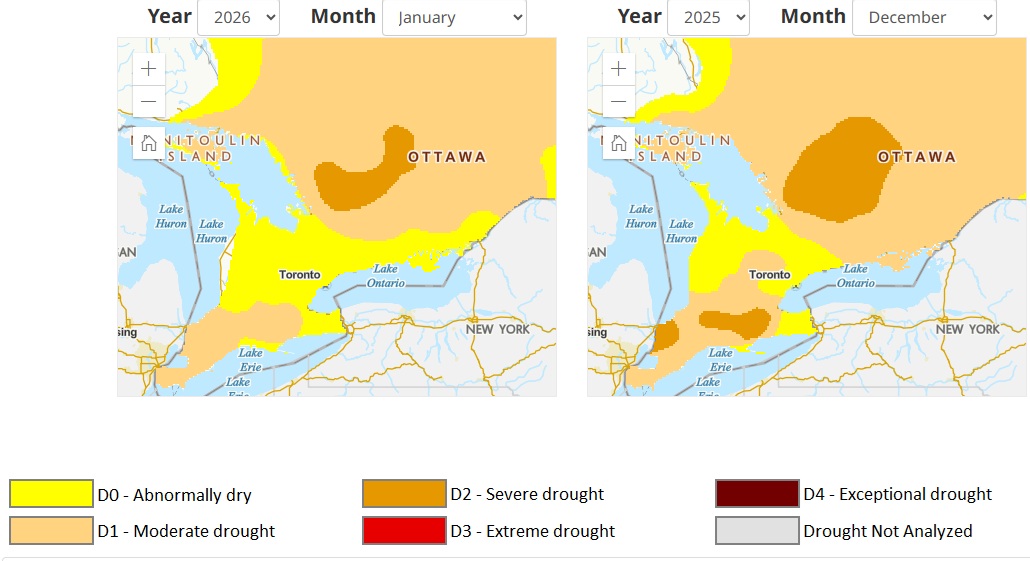
Central region abnormal dryness and drought were slightly improved in January compared to a month earlier but remained elevated overall.
According to the latest monthly update of the Canadian drought monitor, 95% of the agricultural lands in the central region – which includes both Ontario and Quebec – were being impacted by abnormal dryness or drought as of the end of January. That is down a couple of points from December but still on par with November.
January weather across the region delivered a mixed picture, with cooler-than-normal conditions across much of southern Ontario and warmer-than-normal temperatures in the north. Most of Ontario received between 40% and 150% of normal precipitation during the month, supporting modest improvements in moisture conditions, particularly in eastern and central parts of the province. These gains were enough to reduce areas of severe drought and stabilize conditions in several watersheds.
Southern Ontario remains the primary area of concern. While January precipitation allowed for the removal of some severe drought pockets in western and southern parts of the province, it was not sufficient to fully reverse longer-term moisture deficits. As a result, abnormal dryness to moderate drought continued across large portions of southern Ontario, including the Grand River and lower Thames watersheds, where low water conditions persist despite recent snowfall and rainfall.
Central and eastern Ontario saw the most meaningful improvement. Above-normal precipitation contributed to reduced drought intensity and improved streamflow, the monitor said. These improvements provided some short-term relief for agricultural areas, though soil moisture reserves remain below ideal levels heading into late winter.
Northern Ontario experienced more notable recovery, with the removal of abnormal dryness and some reductions in moderate drought. However, pockets of severe and extreme drought remain near the Manitoba border, reflecting lingering long-term deficits despite recent gains.
In Quebec, conditions remained generally drier than in Ontario. Southern Quebec and the Gaspé Peninsula received less than normal precipitation, allowing abnormal dryness and moderate drought to persist, while northern areas saw limited improvement. Seasonal cold temperatures have so far muted immediate impacts, but underlying moisture shortages remain a concern.
Parts of Ontario were buried by heavy snow in January, including a late-month event that brought 46 centimetres to Toronto’s Pearson Airport – the highest daily snowfall since records began in 1937. With the help of that storm, January was also the snowiest month on record for the airport.
North of Toronto, Barrie had already received about 300 centimetres or 9.5 feet of snow from Nov. 1 to the end of January.