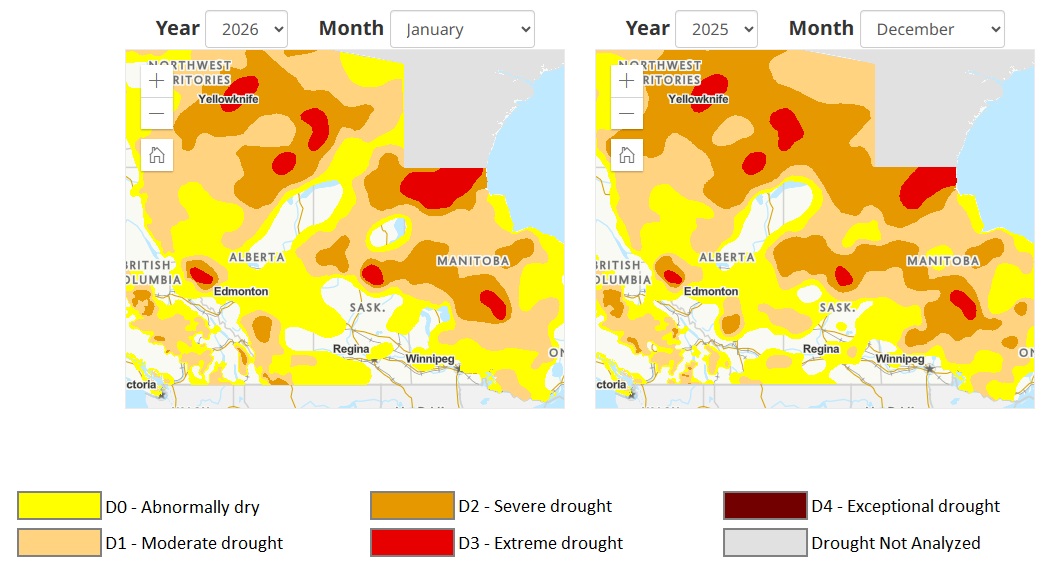
Abnormal dryness and drought across Western Canada didn’t get any worse in January but it didn’t get any better either.
The latest monthly update of the Canadian drought monitor showed 62% of Prairie agricultural lands were being impacted by abnormal dryness or drought as of the end of January. That’s unchanged from December and down from 71% at the end of November.
Across the Prairie region, January weather patterns were defined by sharp temperature swings and a lack of meaningful precipitation, leaving drought conditions largely entrenched, the monitor said. A prolonged warm spell in the middle of the month brought temperatures 10 to 20 degrees C above seasonal norms, accelerating snowmelt and reducing snow cover, especially in southern Alberta and Saskatchewan. While the warmth limited further deterioration in some areas, it also eroded already thin snowpacks that are critical for spring moisture recharge.
Average monthly temperatures finished above normal across most of Alberta, ranging from 3 to 5 C above normal in western and southern regions and exceeding 5 C in parts of the Peace Region. Southeastern Saskatchewan and southern Manitoba were closer to normal, with some areas near or slightly below seasonal averages. Despite these regional differences, precipitation deficits were widespread. Much of the southern Prairies received less than 60% of normal January precipitation, resulting in reduced snow accumulation and limited soil moisture recovery.
In Alberta, dry conditions intensified in several areas. Severe drought expanded west of Red Deer and remained entrenched in the southwest corner of the province, while moderate drought pushed south toward Calgary, east toward the Saskatchewan border, and around the Medicine Hat–Brooks region. Extremely low precipitation totals in January reinforced these trends, with Red Deer recording just 11% of normal precipitation and Lethbridge receiving 26% of normal. Central Alberta also saw moderate drought expand south of Edmonton, while northern Alberta experienced broader areas of abnormal dryness alongside persistent pockets of extreme drought, reflecting very low snow water equivalent in key basins.
Saskatchewan experienced mixed changes. Some south-central areas saw reductions in abnormal dryness, but below-normal precipitation in central parts of the province allowed abnormal dryness through severe drought to expand, with pockets of extreme drought persisting near La Ronge. Northern Saskatchewan fared better, as closer-to-normal precipitation led to improvements and the removal of abnormal dryness and moderate drought in the northwest.
Manitoba saw more widespread deterioration. Southern regions received less than 40% of normal precipitation, prompting southward expansion of abnormal dryness and moderate drought. Central Manitoba worsened as severe drought expanded and an existing pocket of extreme drought in east-central areas persisted. Northern Manitoba also declined, with moderate through extreme drought expanding in the northwest due to limited snowfall.