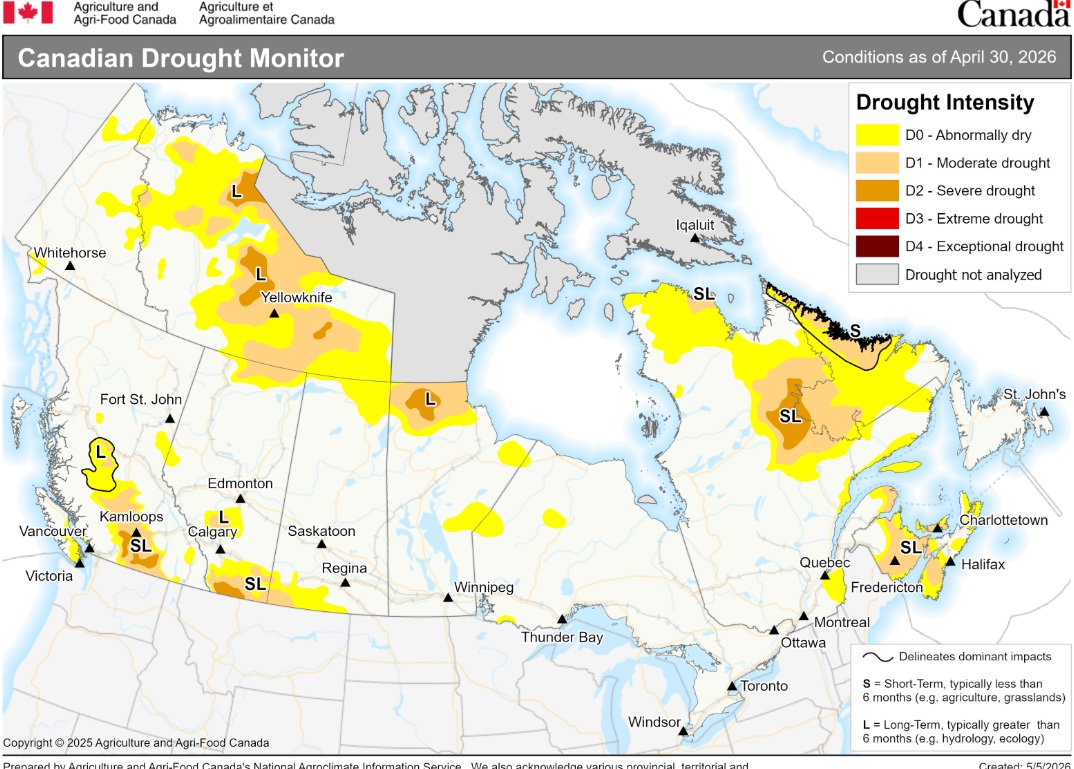
Moisture conditions across Western Canada showed further improvement in April, although some southern areas continued to be shortchanged.
The latest monthly update of the Canadian drought monitor shows just 17% of Prairie agricultural lands were being impacted by abnormally dry or drought conditions as of the end of April. That’s down from 21% at the end of March and sharply below 47% in February. It continues a downtrend from last fall, when farmland impacted by dryness or drought hit 71% in November.
Much of the country received normal to well above normal precipitation in April, with large portions of the northern and central Prairies among those regions recording more than twice the normal April precipitation. However, well below normal April precipitation occurred throughout much of the extreme southern Prairies, the monitor said, with “significant drought” remaining in southern Alberta.
Temperatures were generally near normal across the agricultural regions of Canada and well below normal in northern regions.
Central and northern Saskatchewan and Manitoba were among the biggest beneficiaries, with some regions receiving more than 200% of normal precipitation during April. The added moisture improved soil reserves and reduced drought intensity across large stretches of farmland, although it also increased localized flooding concerns.
Southern Alberta, however, remained a major concern. The monitor noted persistent dryness across the extreme southwest, areas west of Red Deer and portions of the southern Peace region, where winter soil moisture reserves remained low and April precipitation continued to lag normal levels. While cooler temperatures limited evaporation losses, moisture deficits remain entrenched in some areas after multiple dry seasons.
Parts of southern Alberta continue to face significant drought conditions, with concerns centred on low subsoil moisture, stressed pasture conditions and uneven runoff recovery. Some localized areas in northwestern Alberta also saw worsening dryness after receiving only 40% to 85% of normal precipitation during the month.
Despite those concerns, Alberta overall still posted improvement compared to earlier in the year. Above-normal precipitation in central and northern regions boosted soil moisture reserves and helped reduce the extent of dry conditions across the province.
In Saskatchewan, widespread precipitation and late-month snowfall eased dry conditions across central, southern and northern parts of the province. Areas that had previously faced moderate to severe drought saw substantial recovery, particularly in central Saskatchewan where many pockets of dryness were eliminated altogether.
Manitoba moisture conditions were supported by both April precipitation and spring snowmelt. Dryness eased across much of the province, especially in central and east-central regions.