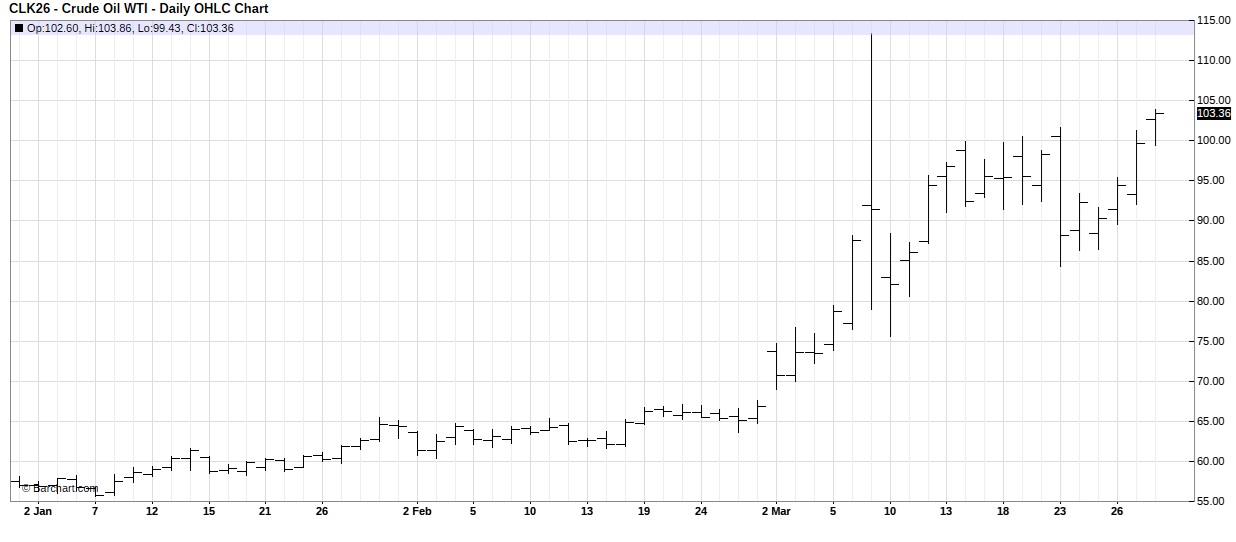
Crude oil pushed higher again Monday as the Iran war entered its fifth week, with traders adding fresh risk premium on fears the conflict could drag on and keep Middle East supply routes under pressure.
By Monday, Brent crude had climbed above $116 a barrel while U.S. West Texas Intermediate (WTI) topped $103 after renewed threats around Iranian energy infrastructure and widening regional tension.
On Feb. 27, the last full trading day before the U.S. and Israel launched strikes on Iran, Brent crude was around $72.50/barrel, and WTI crude just over $67. Since then, Brent has surged about 60%, while WTI crude has jumped about 52%, with today’s move extending the advance even further.
For farmers, the oil rally is a double-edged sword. Higher crude often lends support to corn, soybean and canola futures through biofuel and broader commodity market linkages, but the same energy shock is also lifting farm input costs. The Iran war is already driving up fertilizer and fuel costs enough to potentially alter U.S. planting intentions, with traders generally expecting tomorrow’s USDA prospective plantings report to show fewer U.S. corn and spring wheat acres and more soybeans going in this spring.
Diesel has been especially problematic, with prices surging early in the conflict and farmers in many countries now facing sharply higher fuel bills – or even shortages - as fieldwork ramps up.
May WTI crude: source – Barchart