Agricultural futures continued to push to new multi-month or multi-year highs Monday morning, as the Middle East conflict entered its tenth day.
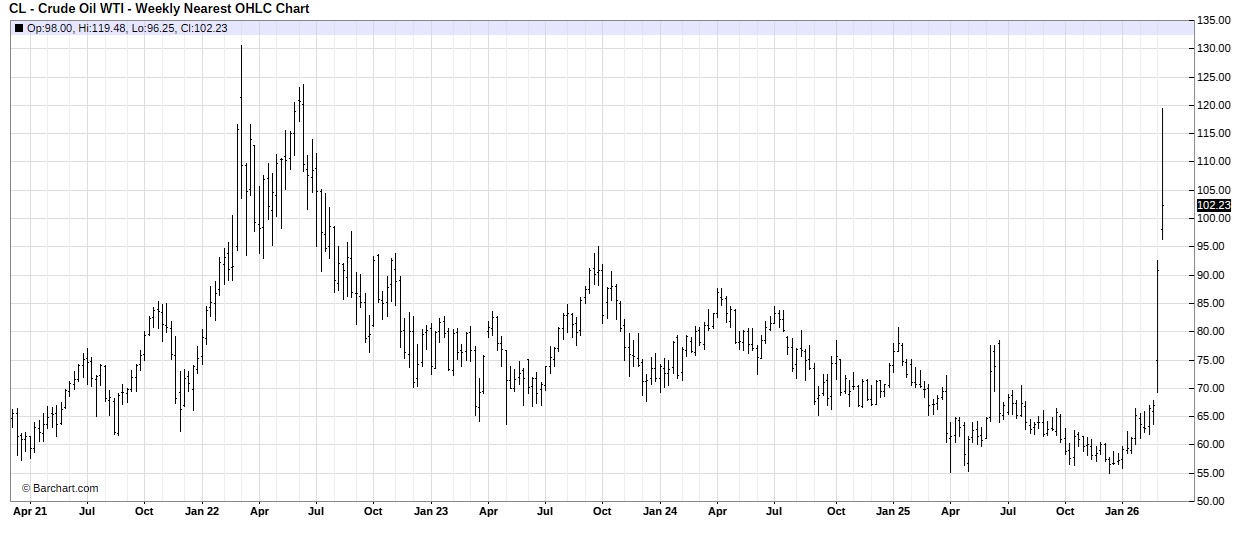
Energy markets have led the rally since hostilities began in late February. Crude oil prices surged amid fears that fighting in the region will crimp supplies from one of the world’s most important energy-producing areas. Just in overnight trading alone, West Texas Intermediate and Brent crude oil futures jumped almost 13%. The conflict is also disrupting tanker traffic through the Strait of Hormuz, a key shipping route for global oil exports.
Global oil prices have now pushed past the $100/barrel benchmark, the highest since 2022 in the aftermath of the Russian invasion of Ukraine.
April WTI crude: source - Barchart
The rapid escalation in energy prices has spilled directly into agricultural markets, where traders often view grains and oilseeds as closely linked to the broader commodity complex. Higher crude oil prices increase the cost of transportation and farm inputs such as fertilizer while also boosting demand for biofuels made from crops.
Chicago corn futures have moved steadily higher alongside crude oil – as well as rising fertilizer prices - supported in part by expectations that stronger energy prices could increase demand for corn-based ethanol. Ethanol production accounts for a large share of U.S. corn usage, and rising gasoline prices often translate into improved margins for biofuel producers.
May corn: source – Barchart

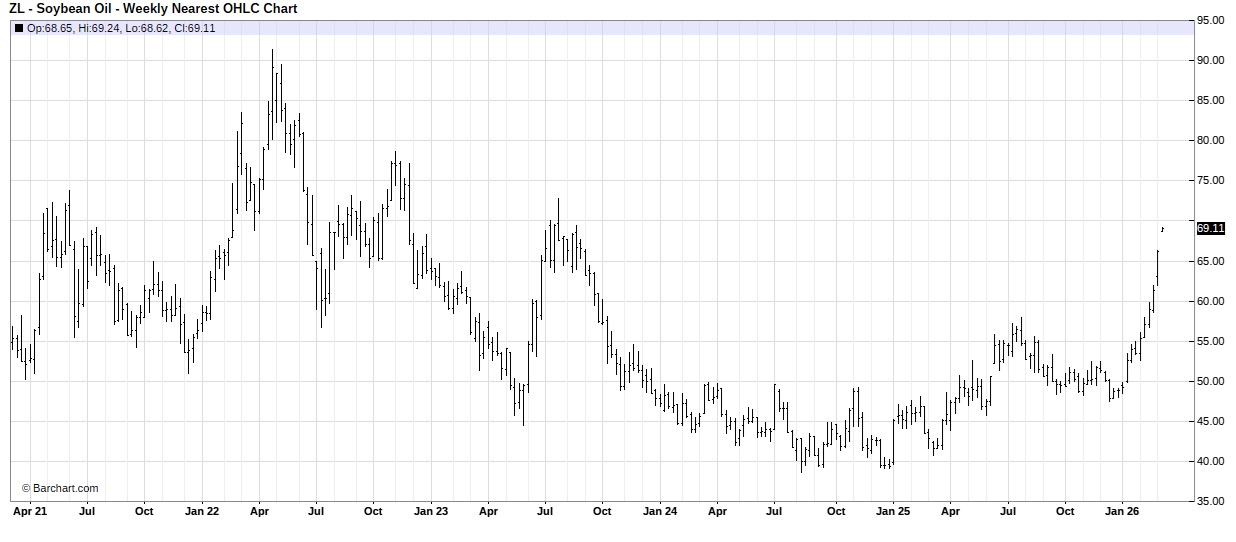
Soybean futures have also posted solid gains during the latest rally, with additional support coming from surging vegetable oil markets. Soybean oil prices have climbed sharply in recent sessions as the spike in crude oil strengthens demand prospects for renewable diesel and other biofuel products. The strong advance in soybean oil has been one of the most significant developments within the agricultural complex since the conflict began.
May soybean oil: source – Barchart
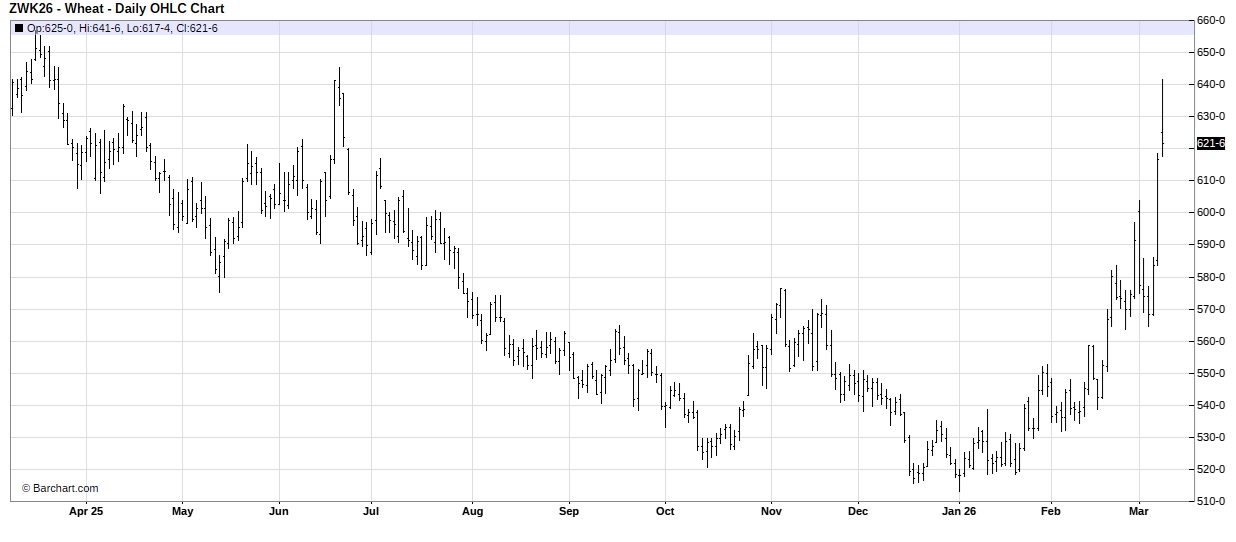
Wheat futures have also moved sharply higher, partly reflecting the broader surge across commodity markets as investors seek exposure to hard assets during periods of geopolitical tension. Traders note that fund buying often increases in agricultural markets during times of global uncertainty. Dryness in portions of the U.S. southern Plains has also helped to boost wheat.
May Chicago wheat: source – Barchart